
Australian interior design in 2026 is moving away from stark, minimalist spaces towards homes that feel meaningful, expressive and restorative. The shift is less about following fast trends and more about creating spaces that support everyday life.
The top interior design trends this year share a clear thread. Think warm earthy palettes, broad indigo accents, biophilic design, curved forms, cooler metallics and a 1970s revival built on character and sustainable materials.
In Perth, that translates to warm, grounded interiors that suit the local climate and feel personal rather than showroom-perfect. Here is what to watch in the year ahead.
Palette: Earthy Neutrals and Deep Indigo
Australians are swapping clinical, all-white walls for layered, grounded tones. The new neutrals feel warm rather than cold, with creamy whites like Pantone’s Cloud Dancer working beautifully as a base.
From there, designers are adding depth with terracotta, ochre, caramel and muted greens. These warm undertones give a room a sense of calm without feeling flat, much like the mood-boosting power of a considered palette.
Deep, moody indigo is the standout accent colour for 2026. It brings a sense of dusk and tranquillity to living spaces and pairs effortlessly with soft neutrals and natural timber.
Colour drenching is also holding strong. This involves saturating walls, ceilings and furniture in a single colour or tonal family to create an immersive, mood-driven environment.
It is a confident look that works beautifully in bedrooms and bathrooms, where a wrapped tonal palette makes the room feel considered and complete. Expect this trend to stay strong right through 2026.
Cherry reds and warmer accent tones are creeping in too, adding a touch of personality against the earthy base.
Texture Takes Over
If one idea defines 2026, it is texture. Tactile materials create a sense of calm and comfort, and they are quickly replacing flat, glossy finishes.
Layered textures add warmth and a feeling of richness to a space. Designers are combining materials like velvet and linen to make interiors feel collected rather than staged.
Expect to see plenty of tactile detailing, including:
- Fluted and reeded millwork that adds visual depth
- Hand-painted walls and textured stone tiles
- Feature walls in fluted wood panelling or 3D tiles
- Subtle texture through natural stone and raw timber
Even a single textured wall can transform the mood of an entire space, which is why feature walls remain such a popular starting point.
Natural Materials and Sustainability
Conscious design is still a priority, with a clear focus on quality, longevity and the “buy less, buy better” mindset. Around 97% of consumers say they are interested in buying sustainable furnishings, so this is far more than a passing idea.
Biophilic design is leading the way. It moves beyond simple potted plants towards full sensory immersion using natural stone, timber, open airflow and organic shapes.
The goal is to deepen the relationship between home and nature. Natural materials create environments that feel alive and breathable, and research consistently links them to better mood and lower stress.
Curved forms and botanical motifs sit comfortably within this look, echoing the organic shapes found outdoors. Marble, raw stone and natural textures bring a renewed appreciation for materials that age gracefully.
This is also where quiet luxury shows up. It is less about logos and more about high-quality materials and understated elegance, with eco-conscious living guiding every decision.
Sustainability runs right through the material choices too:
- Natural timber, concrete and clay are used as honest, durable finishes
- Recycled metals and eco-certified timbers
- Quality craftsmanship designed to last rather than be replaced
Cooler metallics are part of this refresh as well. While warm brass and bronze have dominated recent years, polished silver, stainless steel and brushed nickel are enjoying a chic revival that adds a sleek, contemporary edge.
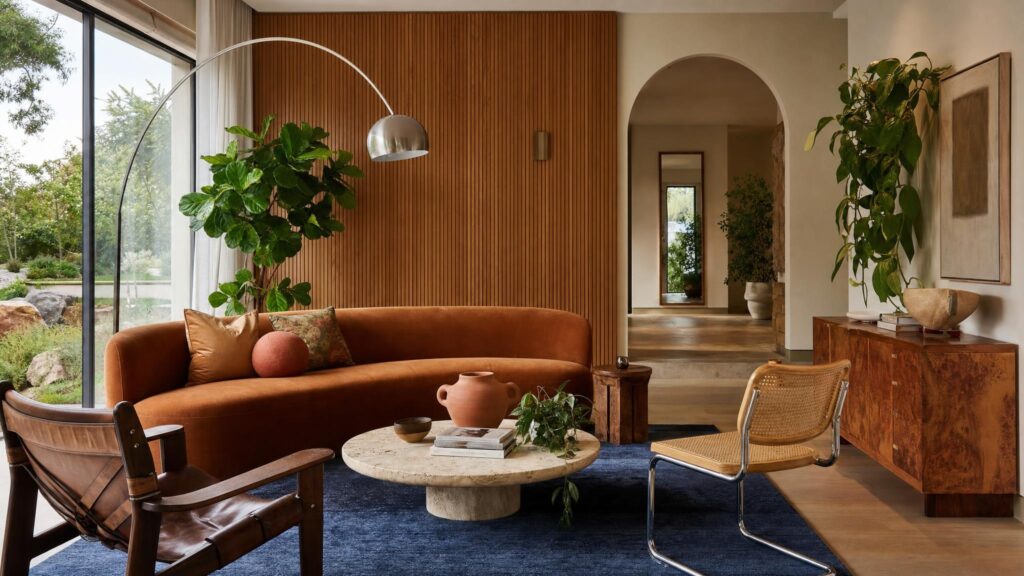
Curves and Organic Forms
Harsh, boxy lines are softening as homes lean into flow, comfort and slow living. Curved and organic forms now shape both furniture and architecture.
Rounded sofas, circular tables and sculptural armchairs continue to rule the living room. These shapes create a natural sense of harmony and gently guide movement through a space.
The same thinking is shaping the build itself. Arched doorways and curved kitchen islands remain highly sought after, while new homes use expansive glazing and minimal-sightline aluminium windows to merge indoor and outdoor living.
Sculptural lighting finishes the look. A single statement pendant or curved floor lamp can add artistic flair while keeping the overall scheme calm and considered.
These rounded silhouettes also make compact Perth homes feel softer and more generous, since there are no sharp angles cutting through the room.
Expression and the 1970s Revival
The “matchy-matchy” furniture set is firmly on the way out. In its place is a curated, eclectic, collected-over-time aesthetic that feels personal and lived-in.
The 1970s are back, reimagined for modern homes. Mid-tone timbers, glass bricks and conversation pits are returning, alongside warm chocolate browns and gentle nostalgia.
Mixing wood tones is a big part of this. Designers are layering light woods with medium and dark timbers in the same room, which adds character and warmth without cluttering the space.
Pairing heirloom antiques and vintage pieces with modern silhouettes has become a styling staple. This modern heritage approach blends classic detail with contemporary design so a room tells a story rather than looking off-the-shelf.
Slow Living and Emotional Design
Underneath all of these trends is a collective desire for homes that feel good to be in. Around 55% of consumers now prioritise comfort in their living spaces, and emotional design reflects that.
Slow living encourages interiors that support everyday rituals and wellbeing. Rather than chasing strict rules, the focus is on personal expression and spaces that feel warm and genuinely yours.
This is warm minimalism rather than stark minimalism. Clean lines and uncluttered rooms remain, but they are softened with organic materials, layered textures and earthy tones that make a home feel restorative.
Plenty of natural light ties it together. Functional architecture in 2026 emphasises volume and light, helping every material and texture show at its best.
Need Help Bringing 2026 Trends Into Your Home? Contact Furniture Fitouts Today!
The interior design trends shaping 2026 all point in the same direction: warm, textured, sustainable interiors that feel personal and calm. Whether you are styling a home to live in or preparing a property for sale, the right furniture and styling make all the difference.
The team at Furniture Fitouts can help you bring these trends to life with curated furniture and expert styling tailored to your space.
Get in touch today to start planning a home that feels as good as it looks.