
Interior decorating and home staging both enhance the look of a property, but they serve very different purposes. Interior decorating focuses on personalising a space for long-term living, with interior design choices tailored to the homeowner’s lifestyle, comfort, and preferences.
Home staging, on the other hand, is a strategic marketing tool used to prepare a property for sale, using neutral styling and carefully selected furniture to appeal to the widest possible buyer audience.
While interior decorating prioritises functionality and personal expression, home staging is designed for speed, visual impact, and buyer psychology.
What Is Interior Decorating?
A Personalised Approach to Living Spaces
Interior decorating starts with understanding the purpose. Interior decorating is centred around creating a space that reflects how you live, what you value, and how you want your home to feel day to day.
Every decision is guided by the homeowner’s lifestyle, personal taste, and routines, whether that means designing a calm, minimal retreat or a vibrant, expressive environment.
Unlike short-term styling, interior decorating focuses on comfort, usability, and long-term living. Many interior designers and an interior decorator prioritise everyday living outcomes over short-term visual appeal.
The goal is to create a space that not only looks good but also works seamlessly for everyday living, supporting relaxation, entertaining, and practical daily tasks.
Key Features of Interior Decorating
Interior decorating involves a more considered and permanent approach to styling a home.
This is where interior decoration plays a key role in shaping both the look and functionality of a home.
Key features typically include:
- Custom furniture and finishes selected to suit the space and the homeowner’s preferences
- Bold colours, textures, and personal décor that reflect individual style
- Permanent design decisions aligned with long-term lifestyle needs
- Functional layouts designed around everyday use
These elements create a cohesive and personalised environment tailored to the homeowner, rather than designed for the broader market.
When Interior Decorating Makes Sense
Interior decorating is the right choice when the focus is on living in and enjoying the space long-term. This typically includes:
- Moving into a new house and making it your own
- Renovating or upgrading to better suit your lifestyle
- Creating a comfortable and functional environment
Here, the focus is on lifestyle and comfort, not resale or market positioning.
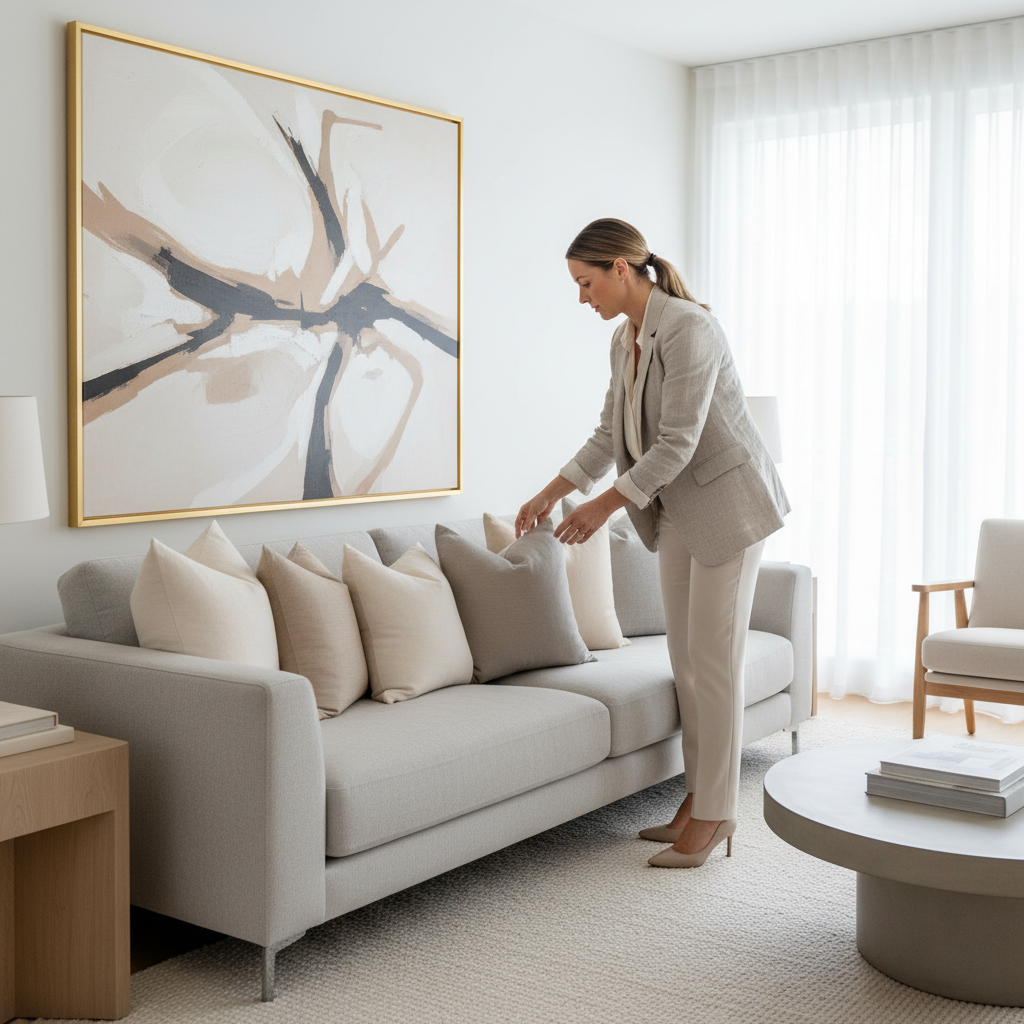
What Is Home Staging?
A Strategic Approach to Selling Property
Home staging is a strategic process used to prepare a property for sale by making it appealing to as many potential buyers as possible.
Rather than reflecting the homeowner’s personality, it focuses on creating an inviting space that builds buyer interest and strengthens the home’s appeal. The goal is to increase perceived value, improve visual appeal, and generate stronger engagement during inspections and online listings.
This is why professional home staging is widely used in real estate, often recommended by real estate agents to maximise a property’s appeal.
Key Features of Home Staging
Home staging follows a structured process designed to maximise buyer appeal. Experienced home stagers understand how to position a property to appeal to buyers and highlight its strengths.
Many property stylists also contribute to staging projects, focusing on the finishing touches that enhance visual appeal.
Key features typically include:
- Neutral colours and neutral styling to attract a broad audience
- Depersonalised spaces to avoid distracting potential buyers
- Temporary or rented furniture selected for scale and layout
- Styling tailored for photography, natural light, and inspections
These elements help highlight the property’s best features and create a move-in-ready feel.
When Home Staging Is the Right Choice
Home staging is most effective when preparing a property for sale and aiming to sell faster in a competitive real estate market.
It is commonly used for:
- Preparing a property before listing
- Launching a campaign with a strong visual appeal
- Increasing buyer interest and engagement
In these cases, staging helps attract more buyers and achieve stronger outcomes.
Interior Decorating vs Home Staging: Key Differences
| Aspect | Interior Decorating | Home Staging |
| Goal | Personalised living space designed for comfort and lifestyle | Sell property quickly and maximise appeal |
| Audience | Homeowner and their specific preferences | Potential buyers with varied tastes |
| Style | Personal, expressive, and tailored | Neutral, clean, and broadly appealing |
| Timeline | Weeks to months, depending on the scope | Days to weeks for fast market readiness |
| Furniture | Permanent, custom, and investment pieces | Temporary, strategically selected furniture |
| Focus | Functionality, comfort, and daily living | First impressions and visual impact |
Speed, Cost, and ROI Differences
Timeline Comparison
One of the most noticeable differences between interior decorating and home staging is how quickly each can be delivered.
- Home staging is designed for speed. In most cases, a property can be fully staged within 1 to 3 days, allowing it to be market-ready almost immediately. This fast turnaround is essential when preparing for listings, inspections, and marketing campaigns.
- Interior decorating, on the other hand, follows a more detailed and layered interior design process. It often takes weeks to months, depending on the scope of work, sourcing of furniture, and level of customisation involved.
Cost Considerations
The cost structure between the two approaches also differs significantly based on their purpose.
- Home staging is a short-term investment focused on achieving a specific outcome: selling the property. Costs are typically tied to rental furniture, styling, and installation for a defined period.
- Interior decorating is a long-term investment. It involves purchasing furniture, finishes, and décor that are intended to last, making it a more substantial upfront cost with ongoing value.
Return on Investment
Both approaches deliver value, but in very different ways.
- Home staging can:
- Increase the perceived value of a property
- Attract more buyer interest
- Reduce time on the market
- Interior decorating improves:
- Everyday comfort and functionality
- Personal enjoyment of the space
- Long-term livability and satisfaction
Ultimately, staging is about maximising financial return during a sale, while decorating is about enhancing the quality of life within the home.
Whichever path you take, paint tends to do the heavy lifting before any furniture arrives — neutral tones to widen appeal ahead of a sale, or a considered palette chosen around how you actually live. It is also the cheapest lever to pull: repainting a room costs a fraction of restyling it, and it sets the backdrop every other finish is then selected against. Perth homeowners weighing up where to start can book a professional colour consultation before committing to a scheme.
Buyer Psychology vs Personal Preference
Home Staging Uses Buyer Psychology
Home staging is built around understanding how buyers think, feel, and make decisions. Rather than focusing on individual taste, it uses proven visual and emotional cues to create a space that appeals to the widest possible audience.
- Neutral colours create a clean, versatile backdrop that allows buyers to imagine their own style in the home
- Open layouts enhance the perception of space, making rooms feel larger and more functional
- Minimal clutter removes distractions, helping buyers focus on the property itself rather than the current owner’s belongings
The goal is to create a strong first impression and an emotional connection, making it easier for buyers to picture themselves living in the space.
Interior Decorating Reflects Personality
Interior decorating takes the opposite approach, focusing on creating a space that reflects the personality, lifestyle, and preferences of the homeowner. Every design decision is personal and intentional.
- Unique styling choices allow homeowners to express their individual taste and aesthetic
- Sentimental items such as artwork, photos, and collected pieces add meaning and character
- Lifestyle-driven layouts are designed around how the space is used daily, prioritising comfort and functionality
While this creates a deeply personalised and enjoyable living environment, it can limit broad appeal, which is why this approach is best suited for homes that are being lived in, not sold.
How to Choose the Right Option
Choosing between interior decorating and home staging comes down to one simple question: Are you living in the space, or are you selling it?
Each approach serves a different purpose, and selecting the right one ensures you get the best possible outcome for your situation.
Choose Interior Decorating If:
Interior decorating is the right fit when your focus is on long-term living and creating a space that works for your lifestyle.
- You’re living in the home long-term and want it to reflect your personality
- You want a personalised space tailored to your taste and preferences
- Functionality, comfort, and day-to-day usability are your top priorities
In this case, the goal is to create a home that feels right for you, not for a broad audience.
Choose Home Staging If:
Home staging is the better choice when your goal is to prepare a property for sale and make it as appealing as possible to buyers.
- You’re selling your property and want it to stand out in the market
- You want faster results and a more efficient sales process
- You want to maximise buyer interest and perceived value
Need Further Help Deciding? Contact Furniture Fitouts Today!
Choosing between interior decorating and home staging ultimately comes down to your goal, whether you are creating a home to live in or preparing a property to sell.
If you are unsure which approach is right for your situation, our team at Furniture Fitouts can guide you with practical, tailored advice.
From strategic home staging to complete furniture solutions, we help you present your property at its best and achieve the outcome you are aiming for.
Get in touch with our team today!